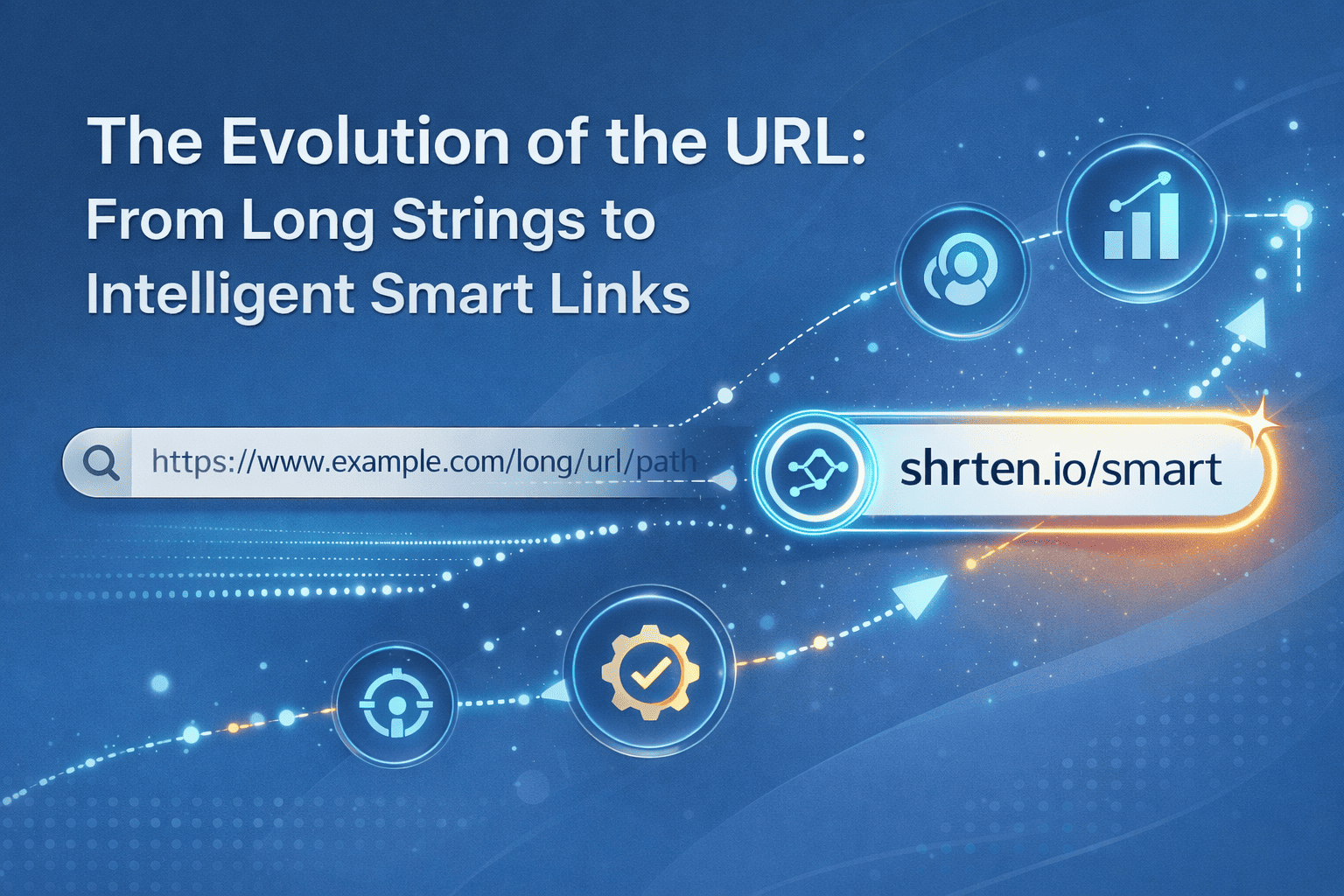
Explore how URLs evolved from simple web addresses to intelligent smart links. Learn why modern links are dynamic, trackable, and essential for today’s web.
The Evolution of the URL: From Long Strings to Intelligent Smart Links
The URL is one of the most fundamental building blocks of the internet. Every webpage, file, app action, and digital interaction relies on a URL to function. Yet, despite its importance, most people rarely stop to think about how URLs have evolved—or how dramatically their role has changed over time.
What started as a simple address system for locating documents has transformed into a powerful layer of intelligence that drives analytics, personalization, automation, and business growth. Today, URLs are no longer just links. They are smart, dynamic, and data-driven assets.
This article explores the evolution of the URL—from long, technical strings to modern intelligent smart links—and explains why this transformation matters for businesses, marketers, and the future of the web.
The Birth of the URL: A Simple Address System
The concept of the URL (Uniform Resource Locator) was introduced in the early 1990s as part of the World Wide Web. Its original purpose was straightforward: to provide a standardized way to locate resources on the internet.
Early URLs were designed for machines and engineers, not humans. They often looked like this:
http://www.example.com/folder/subfolder/file.html
At the time, usability and aesthetics were secondary concerns. The internet was small, technical, and primarily used by academics and researchers. URLs needed to be accurate, not pretty.
When URLs Became Longer and More Complex
As websites became more dynamic, URLs started carrying additional information. Parameters were added to track sessions, user states, filters, and actions.
URLs began to look like this:
https://example.com/products?category=shoes&type=running&color=blue&sort=price_desc
These URLs worked technically, but they introduced new problems:
- Difficult to read and remember
- Prone to breaking when shared
- Unfriendly for print and offline use
- Reduced trust among users
The URL was no longer just an address—it was becoming a data container. And that complexity created friction.
The Rise of Marketing and Tracking URLs
As digital marketing emerged, URLs took on another role: tracking performance. Marketers needed to know where traffic came from, which campaigns worked, and how users behaved.
This led to tracking parameters such as UTM tags:
https://example.com/offer?utm_source=facebook&utm_medium=cpc&utm_campaign=summer_sale
While powerful, these URLs were even longer and messier. Sharing them on social media, emails, or offline materials became a problem. They looked spammy and reduced click-through rates.
The internet needed a better way to manage links.
The First Wave of URL Shortening
URL shorteners emerged as a solution to the growing complexity of links. Their initial purpose was simple: take a long URL and turn it into a short one.
For example:
https://shrten.io/abc123
This transformation solved multiple problems at once:
- Links became easier to share
- URLs looked cleaner and more trustworthy
- Offline and print use became practical
- Social platforms handled links better
However, early URL shorteners were still passive tools. They shortened links but offered little intelligence beyond basic redirection.
When URLs Became Measurable Assets
The next major evolution came when short links started collecting data. Click tracking, geographic insights, device detection, and referrer data transformed URLs into measurable assets.
Suddenly, a link could tell you:
- How many people clicked
- Where they came from
- What device they used
- When they clicked
This shifted the perception of URLs from static addresses to performance indicators. Links were no longer just pathways—they were feedback loops.
The Problem with Static Links
Despite analytics, traditional links still had a major weakness: they were static. Once published, they could not adapt to change.
If a destination page moved, expired, or was deleted, the link broke. This led to widespread link rot, broken campaigns, and poor user experiences.
Static links could not:
- Adapt to new campaigns
- Change destinations dynamically
- Respond to user context
- Support long-term reuse
The internet needed links that could think.
The Emergence of Intelligent Smart Links
Smart links represent the most advanced stage in the evolution of the URL. Unlike traditional links, smart links act as an intelligent layer between the user and the destination.
Platforms like Shrten.io enable links to become:
- Editable after creation
- Context-aware
- Analytics-driven
- Reusable across campaigns
A smart link can redirect users based on logic instead of a fixed rule.
What Makes a Link “Smart”?
Smart links go beyond shortening. They introduce intelligence into routing and behavior.
Key characteristics of smart links include:
1. Dynamic Destination Control
The destination URL can be updated anytime without changing the public link. This prevents broken links and supports long-term campaigns.
2. Context-Aware Redirects
Smart links can redirect users based on:
- Geographic location
- Device type
- Operating system
- Time or date
3. Built-in Analytics
Every click provides insight, enabling optimization and data-driven decisions.
4. Campaign Flexibility
One link can serve multiple campaigns over time without being replaced.
Why Intelligent Links Matter for Businesses
For businesses, the evolution of the URL has direct financial and operational impact.
- Marketing campaigns become future-proof
- Offline materials remain usable
- SEO damage from broken links is avoided
- Customer experience improves
- Link management becomes centralized
Instead of managing hundreds of fragile URLs, businesses manage a stable layer of smart links.
Smart Links and the Modern Internet
Today’s internet is dynamic, personalized, and multi-channel. Users interact across social media, messaging apps, emails, QR codes, and offline touchpoints.
Smart links unify these interactions under a single, controllable system. One link can live everywhere and adapt everywhere.
The Future of URLs
The evolution of the URL is far from over. As AI, automation, and personalization advance, links will become even more intelligent.
Future URLs may:
- Optimize themselves automatically
- Predict the best destination
- Adjust based on user behavior patterns
- Integrate deeply with AI-driven systems
In this future, URLs are not just connectors—they are decision-makers.
How Shrten.io Fits into This Evolution
Shrten.io is built for the modern and future internet. It transforms URLs into intelligent assets that adapt, measure, and perform.
By using Shrten.io, businesses move from fragile, static URLs to a resilient smart-link infrastructure.
Conclusion
The URL has come a long way—from simple addresses to intelligent smart links that drive performance, insight, and growth.
As the web continues to evolve, businesses that treat links as strategic assets will gain a clear advantage.
The future of the internet is not just about content. It’s about how intelligently that content is connected—and smart links are at the center of that future.